![wethos_icon_light-mode-nmcocwgai7dk3bq6c54sa7ubcw.svg]](https://24346244.fs1.hubspotusercontent-na1.net/hubfs/24346244/wethos_icon_light-mode-nmcocwgai7dk3bq6c54sa7ubcw.svg)
PRESSURE TESTING IDEAS
The problem: You have an idea but want to stress-test it before bringing it to a broader group — without scheduling another meeting or Slack thread.
How Cognitive Twins helps: Consult the twins of the people who will ultimately weigh in. Surface objections, identify blind spots, and sharpen your pitch before the real conversation happens.
Example prompts:
- "I'm considering proposing that we consolidate our two weekly syncs into one. What's your reaction?"
- "Here's a rough plan for restructuring the onboarding flow. What would you push back on?"
- "What would you need to see in this proposal before you'd support it?"
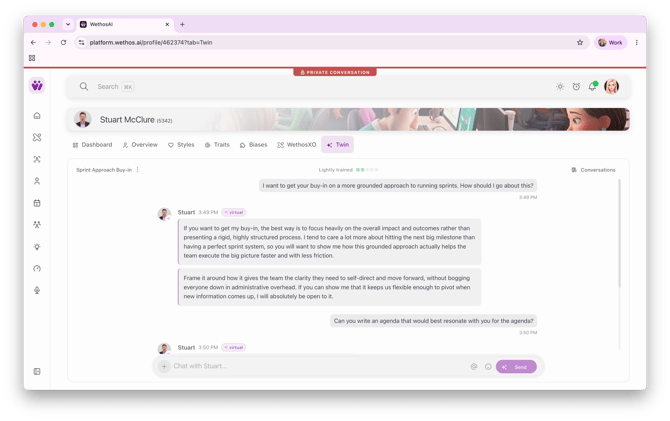
MEETING PREPARATION
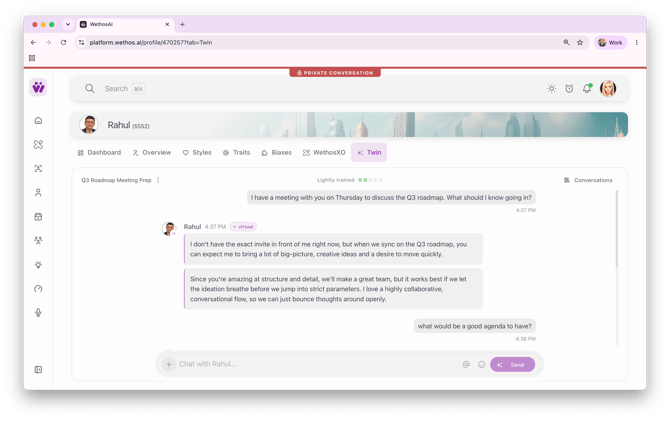
The problem: You're heading into a meeting with someone you don't work with regularly and want to show up prepared — not just on the agenda, but on how they think and what they care about.
How Cognitive Twins helps: Consult your colleague's twin before the meeting to understand their communication preferences, current priorities, and how they like to receive information. If your meeting is on your calendar, the platform will auto-generate a tailored preparation prompt so you can start the conversation immediately.
Example prompts:
- "I have a meeting with you on Thursday to discuss the Q3 roadmap. What should I know going in?"
- "What's the best way to present a new idea to you?"
- "What questions are you likely to ask about this proposal?"
CROSS-FUNCTIONAL COLLABORATION
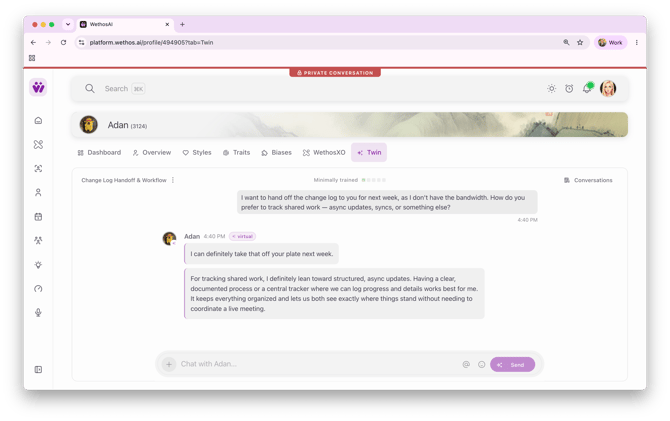
The problem: Working with a partner team means navigating unfamiliar working styles, unstated expectations, and different definitions of "done."
How Cognitive Twins helps: Before kicking off a cross-functional project, consult the twins of your key counterparts to learn how they structure their work, what they expect from collaborators, and where past friction tends to come from.
Example prompts:
- "What does a successful handoff look like to you?"
- "How do you prefer to track shared work — async updates, syncs, or something else?"
- "What's the most common miscommunication you run into with partner teams?"
ONBOARDING AND RAMPING UP
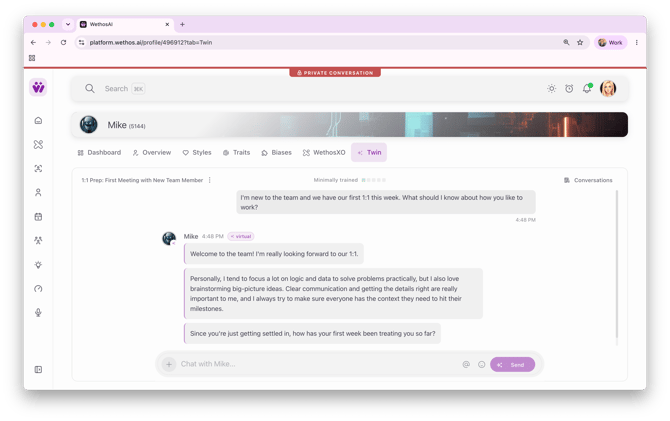
The problem: New team members spend weeks — sometimes months — learning how individual colleagues actually work: how they like to communicate, what they care about beyond their title, and what builds trust with them. That kind of personal understanding normally only develops over time through trial and error.
How Cognitive Twins helps: Before a first 1:1 or a new project kickoff, a new hire can consult that specific colleague's twin to get a head start on the relationship. Instead of guessing how someone operates, they can walk in with real context on that person's preferences and working style.
Example prompts:
- "I'm new to the team and we have our first 1:1 this week. What should I know about how you like to work?"
- "What do you value most in the people you collaborate with?"
- "What's the fastest way to build trust with you?"
PREPARING FOR DIFFICULT CONVERSATIONS
The problem: High-stakes conversations — giving feedback, raising a concern, pushing back on a decision — are hard to get right without understanding how the other person will receive it.
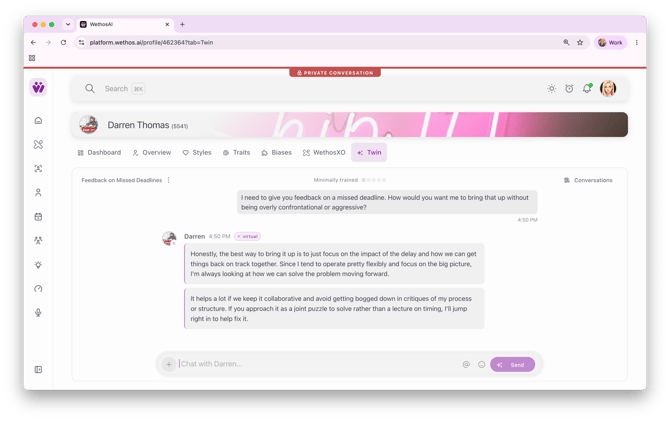
How Cognitive Twins helps: Role-play the conversation with your colleague's twin before having it for real. Test different framings, anticipate reactions, and refine your approach.
Example prompts:
- "I need to give you feedback on a missed deadline. How would you want me to bring that up?"
- "Can we role-play a conversation where I push back on your proposed timeline?"
- "What's the worst way someone could deliver critical feedback to you?"
MANAGER-REPORT ALIGNMENT
The problem: Managers and direct reports don't always share the same understanding of priorities, growth areas, or communication preferences — and the gap only surfaces when something goes wrong.
How Cognitive Twins helps: Managers can consult a report's twin to prepare for 1:1s, performance reviews, or career development conversations with a clearer picture of how that person thinks and what motivates them. Reports can do the same in reverse.
Example prompts:
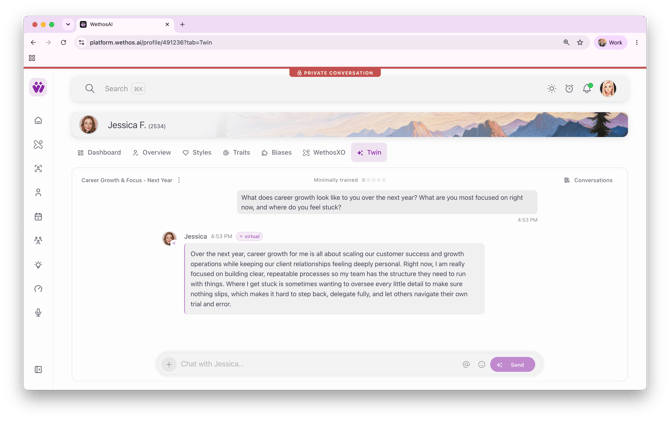
- "What are you most focused on right now, and where do you feel stuck?"
- "How do you like to receive feedback — in the moment, or with time to process?"
- "What does career growth look like to you over the next year?"
ASYNC COMMUNICATION WHEN TEAMMATES ARE UNAVAILABLE
The problem: You need input from a colleague who's out of office, in a different time zone, or deep in focused work — and the question can't wait for their next available slot.
How Cognitive Twins helps: Consult their twin to get a directionally accurate read on how they'd likely respond, so you can keep moving without blocking on their availability. Keep in mind, though, that any big decisions should always be double-checked with them directly.
Example prompts:
- "If I needed to make a call on the vendor contract today, what would you prioritize?"
- "You're out this week — what should I know before I present to the client on your behalf?"
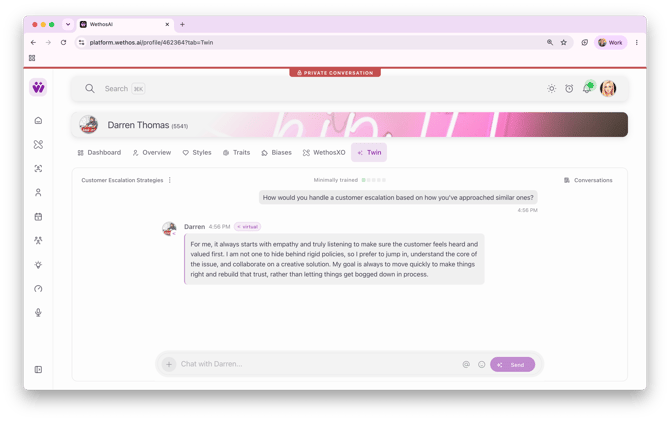
- "How would you handle this customer escalation based on how you've approached similar ones?"
BUILDING A STRONGER PERSONAL BRAND INTERNALLY
The problem: Your colleagues interact with you in narrow, role-specific contexts and may not have a full picture of your expertise, working style, or how you like to collaborate.
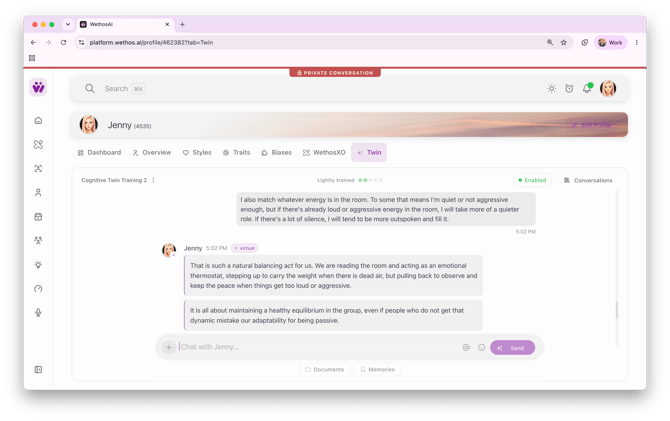
How Cognitive Twins helps: Training your twin with documents, guiding principles, and conversational context means your professional identity is represented accurately when teammates consult it — even if they've never worked with you directly.
Training examples:
- Upload your communication guidelines, planning templates, or project briefs.
- Tell your twin: "I prefer concise updates with clear next steps over long status reports."
- Tell your twin: "When someone brings me a problem, I want to hear their proposed solution first."
PRIVACY NOTE
Every interaction with a colleague's twin is completely private. The colleague is never notified of what you asked, and your training data — including uploaded documents — is never visible to teammates. They only interact with the collaborative guidance your twin generates.